
Blog
Essential Post-Funeral Observations (Buddhist & Taoist Traditions) in Singapore


The funeral service marks the formal end of the vigil, but in Chinese Buddhist and Taoist traditions, the spiritual journey, and the family’s period of mourning, continues long after the casket is sealed.
This guide consolidates the most significant post-funeral customs and observations practised by Chinese families in Singapore. These acts of filial piety are not just rules; they are ways to show respect, generate merit for the deceased, and allow the family time for necessary reflection and healing.
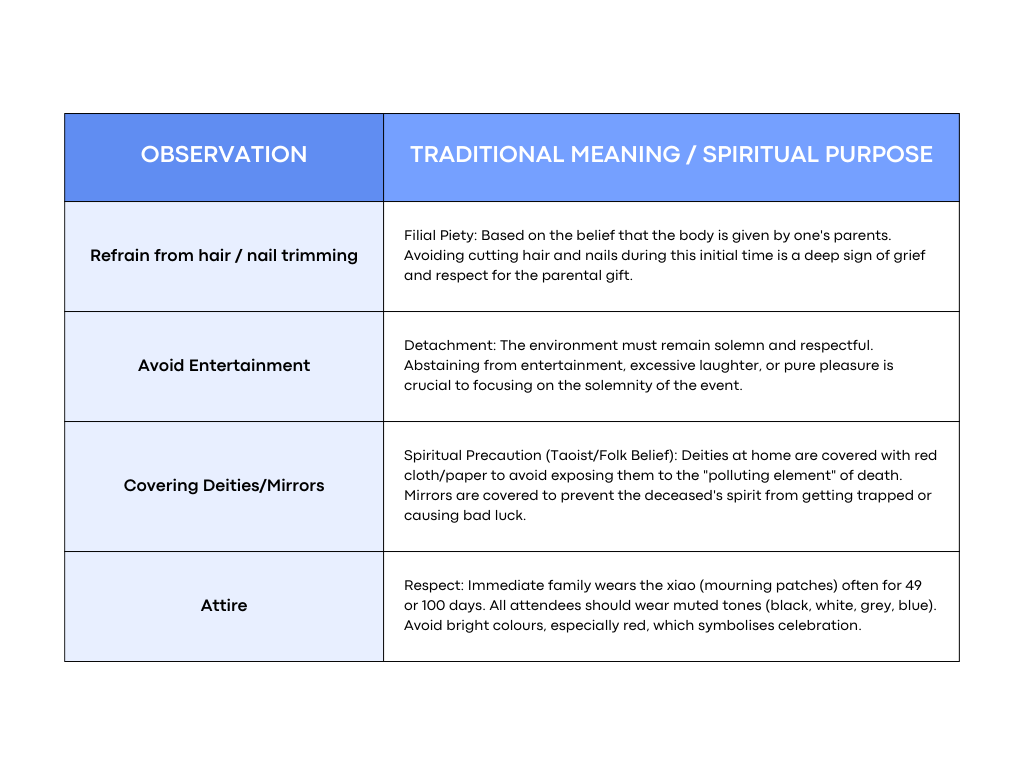
- Observations During the Wake Period
While the body is still in the residence or funeral parlour, certain acts set the tone for the entire mourning period and show immediate respect.

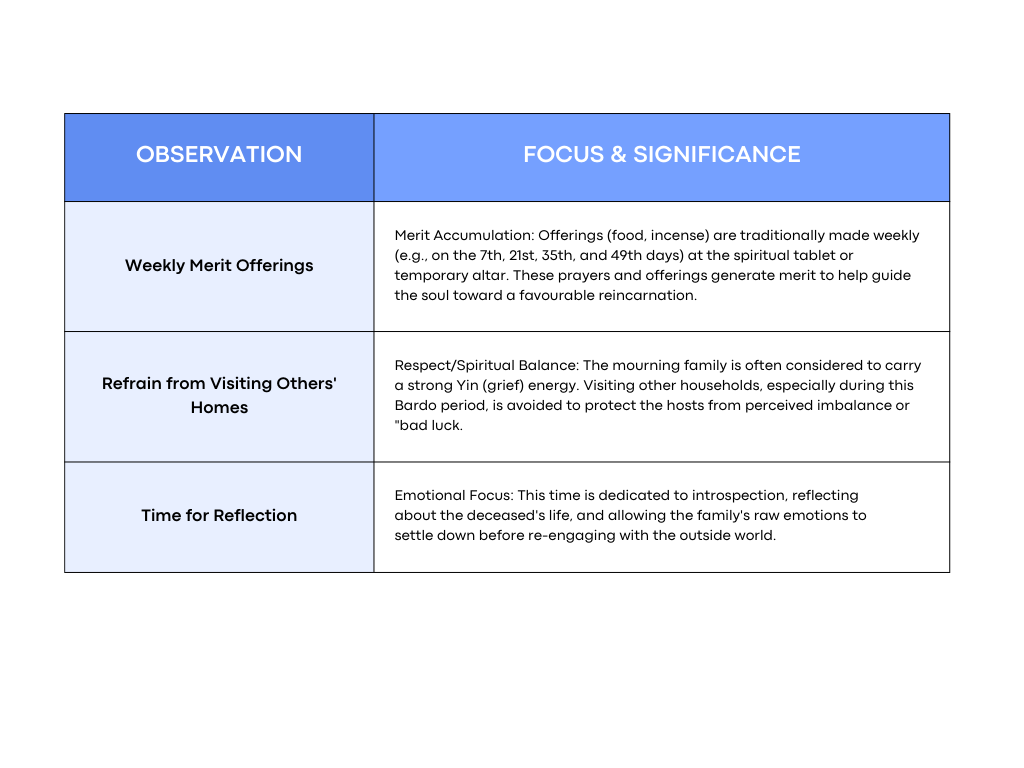
- The Critical 49-Day Period (An Ling / Zuo Qi)
The 49 days following the passing are the most critical period in Buddhism, as the soul is believed to be in the Bardo (intermediate state), undergoing judgment and awaiting a new rebirth.

- Within 100 Days: Transitioning to Ancestor Status
- The 100th day marks the traditional formal end of the deepest mourning period and the time the spirit is formally considered a revered ancestor.
- Avoid Bright Colours & Joyful Events: Continue to avoid wearing bright coloured clothing and strictly refrain from attending weddings, baby showers, or other major celebratory events.
- The Wedding Exception: If a Chinese customary wedding for a family member was already planned, it is often advised to hold it within this 100-day period. If the 100-day window is passed, it is traditionally advised to postpone the celebration until after the first year anniversary.d) 100th Day Memorial: A significant ceremony is held at the columbarium or home altar. This ceremony (sometimes called Gong Teck) commemorates the deceased’s successful transition and marks the family’s official step towards resuming regular life.
- 100th Day Memorial: A significant ceremony is held at the columbarium or home altar. This ceremony (sometimes called Gong Teck) commemorates the deceased’s successful transition and marks the family’s official step towards resuming regular life.
- Ancestral Tablet Placement: This is typically when the Ancestral Tablet is formally installed in the home altar or columbarium niche, marking the deceased’s new role as a guardian ancestor.
- Before the 1st Year Anniversary (Zuo Zhou)
The period until the one-year anniversary is considered the long mourning.- Refrain from Hosting Celebrations at Home: It is customary to refrain from hosting major celebrations like elaborate birthday parties or the full Chinese New Year (CNY) celebrations at the family home. Simple offerings are made at the ancestral tablet instead.
- CNY Visitations: Immediate family members are generally advised not to visit the homes of non-related relatives or friends during the Chinese New Year period in the first year. They may receive guests, but they do not typically initiate visits.
- First Anniversary Rite (The End of Mourning): On the 1st year death anniversary, a final “Combination Prayer” is held. After this ceremony, the family traditionally performs a rite to formally end the mourning period, often by wearing a splash of red or by permanently removing the mourning patches, signifying the return to normalcy.
Conclusion: Honouring Tradition and Supporting the Grieving
The period following a funeral is a sacred time of transition, demanding adherence to traditions for the sake of the departed soul and gentle support for the surviving family. These observations (49 days, 100 days, 1 year) are not just restrictions; they are acts of profound filial piety.
How to Respect a Friend’s Mourning Period
If a friend or colleague is observing these Buddhist or Taoist customs, your support should be practical and respectful:
- Respect their Seclusion: If they refrain from visiting your home or attending celebrations, understand this is a traditional obligation, not a rejection. Do not pressure them to attend weddings or parties during the 49 or 100-day periods.
- Offer Practical Support: Instead of social invitations, offer tangible help: delivering home-cooked meals, running errands, or simply being available for a quiet phone call.
- Acknowledge the Deceased: A simple, sincere message acknowledging the person who passed away is often the greatest comfort.
Plan with Love, Not Distress: Contact Nirvana Singapore
Whether you are seeking guidance on post-funeral customs or need immediate assistance, Nirvana Life Singapore stands ready to serve as your compassionate partner. If you are currently looking for a funeral service provider, choose the team that guarantees transparency, dignity, and specialized care. Don’t wait until the time of need. Plan with love, not distress.