
Blog
Buddhist Cremation vs Burial in Singapore: A Compassionate Guide to Help Your Family Decide (2026)

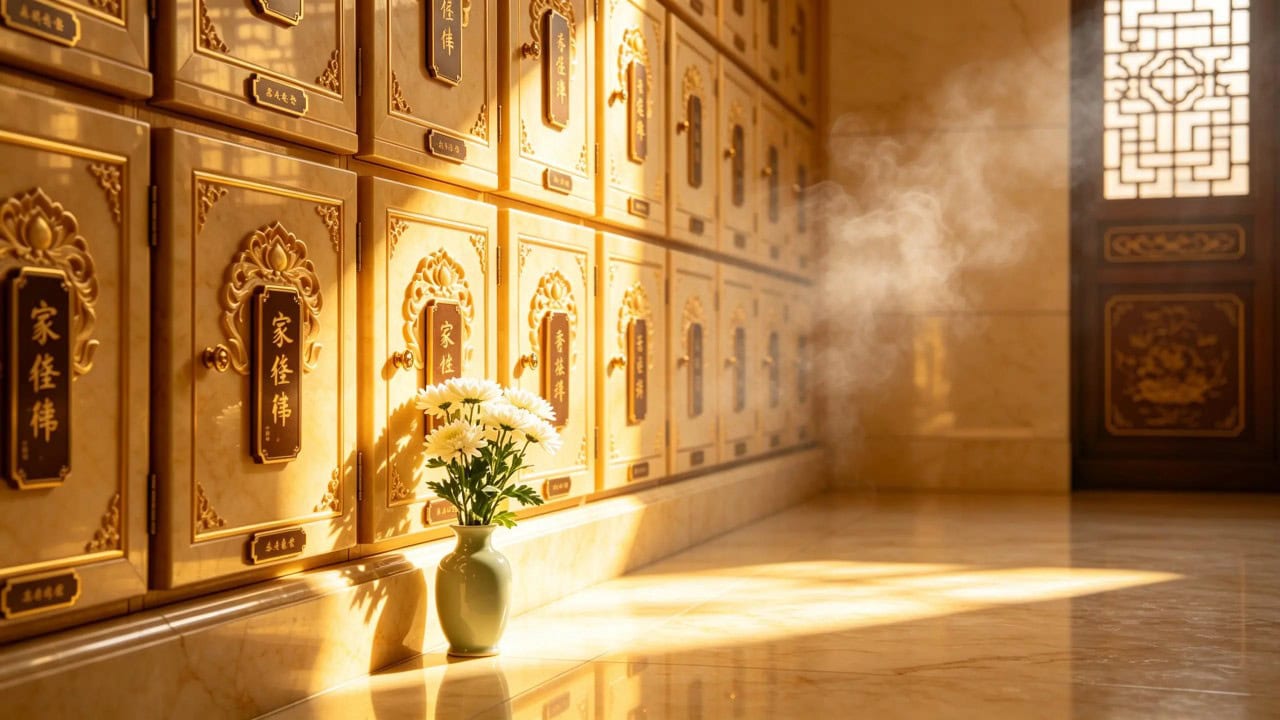
This is one of the most personal decisions a family will ever make, and it often comes at the most difficult of times. When a loved one passes, the question of whether to choose cremation or burial according to Buddhist tradition is something that many Singapore families find themselves thinking through carefully, sometimes for the first time.
There is no single right answer. The best choice is one that honours your loved one’s wishes, aligns with your family’s beliefs, and fits your practical circumstances. This guide is here to help you think through the options clearly, warmly, and without pressure.
What Buddhism Says About Cremation and Burial
Buddhism, as a philosophy, does not mandate either cremation or burial. The Buddha himself was cremated, and this has historically made cremation the more common choice among Buddhist communities across Asia. However, Buddhist teachings emphasise that the body is impermanent and that the spirit of the deceased continues its journey regardless of the physical form of the remains.
Many Buddhist teachers note that what truly matters is the intention behind the rituals performed, the prayers offered, and the love and merit dedicated to the deceased. Whether the body is cremated or buried, the key is that the process is carried out with reverence, care, and the appropriate spiritual observances.
Cremation in Buddhist Tradition
Cremation is the most widely practised option among Chinese Buddhist families in Singapore today. It aligns closely with traditional Buddhist philosophy about the impermanence of the physical body and is also the default option in Singapore due to land scarcity. Following cremation, the ashes are typically placed in a columbarium niche or scattered at sea.
Burial in Buddhist Tradition
Burial is less common in Singapore due to limited land, but it remains an option for families who have strong traditional preferences or specific religious reasons. Government-managed burial plots are available for certain religions and communities through the National Environment Agency (NEA). Some Buddhist families, particularly those with Taoist influences or from certain dialect groups, traditionally preferred burial, viewing it as a more complete form of returning to the earth.
Practical Considerations in Singapore
Beyond religious teachings, there are several practical factors that influence this decision for Singapore families:
Land Scarcity and Government Policy
Singapore’s limited land means that burial is increasingly restricted. The government encourages cremation, and most burial plots have exhumation requirements after a set period, typically 15 years. After exhumation, remains are cremated and placed in a columbarium. This means that for many families, cremation followed by columbarium placement is the most practical and long-term solution.
Cost Differences
Cremation is generally more cost-effective than burial in Singapore. The ongoing costs of maintaining a burial plot, combined with eventual exhumation fees, often make cremation with columbarium placement the more financially manageable choice over the long term.
Family and Community Expectations
Many Chinese Singapore families are guided not only by personal belief but also by dialect group traditions and the preferences of elders. It is worth having open conversations with older family members well in advance to understand their wishes, so that decisions can be made thoughtfully rather than in a rush.
Choosing a Columbarium After Cremation: Key Considerations
If you have decided on cremation (or are leaning in that direction), the next important decision is where to place the ashes. This is where the quality and character of a columbarium really matters.
Government vs Private Columbariums
Government columbariums, managed by the NEA, are located in places like Choa Chu Kang and are a practical, lower-cost option. However, they offer limited customisation and have leasehold arrangements. Private columbariums, including Nirvana Memorial Garden (富贵山庄), offer a higher level of service, more personalised niche options, and a more beautifully designed environment.
Nirvana Columbarium is one of Singapore’s most established private columbarium facilities, offering a range of niche suites designed with traditional Chinese aesthetics and modern comfort in mind.
Freehold vs Leasehold Niches
One of the most important distinctions in Singapore’s columbarium market is between freehold and leasehold niches. Leasehold niches are allocated for a set period (commonly 60 years), after which the family may need to renew or relocate. Freehold niches, on the other hand, are permanent. Lin San Temple (灵山寺) is a notable independent Buddhist temple that offers permanent freehold niches (永久地契骨灰位), providing families with the assurance that a loved one’s resting place is secured for generations.
It is important to note that Lin San Temple (灵山寺) is a separate institution from Nirvana Memorial Garden. However, many experienced Nirvana agents assist families with both Nirvana Memorial Garden (富贵山庄) and Lin San Temple (灵山寺) enquiries, helping you compare the options that are right for your circumstances.
Buddhist Funeral Services in Singapore: What to Expect
Regardless of whether you choose cremation or burial, a Buddhist funeral in Singapore typically involves several meaningful rituals. These include the laying in state, chanting by monks or nuns over several evenings, the cremation or burial itself, and a series of memorial observances in the weeks that follow. A qualified Buddhist funeral services provider in Singapore can guide your family through every step with compassion and cultural sensitivity.
The choice of a comprehensive Buddhist funeral package in Singapore typically covers the full range of services from the initial arrangements through to the final placement of ashes. Choosing a complete package simplifies the process considerably during an already emotional time.
The Role of Pre-Planning in Making This Decision
One of the kindest things you can do for your family is to think about these choices before they become urgent. When a person passes suddenly, their family is left to make major decisions under enormous emotional pressure and often within a very short timeframe. Pre-planning removes that burden.
By thinking through the cremation vs burial question in advance, choosing your preferred columbarium, and discussing your wishes openly with family members, you give everyone the gift of clarity and peace. Funeral pre-planning in Singapore is becoming increasingly common, and for very good reason.
Explore the full range of 富贵山庄配套 (Nirvana Memorial Garden packages) for a clear overview of what is available, or speak with a knowledgeable agent for personalised guidance.
Frequently Asked Questions: Buddhist Cremation vs Burial in Singapore
Is cremation mandatory in Singapore?
Cremation is not legally mandatory in Singapore, but it is strongly encouraged by government policy due to land constraints. Most families ultimately choose cremation. Burial plots are available through the NEA for eligible applicants, but they come with limited availability and exhumation requirements.
Do Buddhist monks recommend cremation or burial?
Most Buddhist monks in Singapore support cremation, largely because of the Buddha’s own example and the pragmatic land constraints of the island. However, many emphasise that the most important factor is the sincerity of the rituals performed and the merit dedicated to the deceased, rather than the physical form of disposal.
What happens to the ashes after cremation in Singapore?
After cremation, the ashes (also called cremains) are typically placed in an urn and then stored in a columbarium niche. Families choose niches based on their preferences for location, design, and permanence. Some families also choose to scatter ashes at sea through designated NEA programmes.
What is the difference between Nirvana Memorial Garden and Lin San Temple for columbarium placement?
Nirvana Memorial Garden (富贵山庄) is a comprehensive memorial facility that offers both funeral services and columbarium suites in a beautifully landscaped setting. Lin San Temple (灵山寺) is a separate, independent Buddhist temple whose columbarium is particularly known for its permanent freehold niches (永久地契骨灰位). The right choice depends on your family’s priorities: the full-service environment of Nirvana Memorial Garden, or the permanence of a freehold niche at Lin San Temple.
How do Chinese funeral customs influence the cremation vs burial decision?
Chinese funeral customs in Singapore are rich and varied, with different dialect groups (Hokkien, Teochew, Cantonese, Hakka, and so on) having somewhat different traditions. These customs often shape how a family approaches the question of cremation vs burial, as well as the rituals performed during and after the funeral. For a deep dive into these traditions, the complete guide to Chinese funeral customs in Singapore is an excellent resource.
Making the Decision That Feels Right for Your Family
Ultimately, the choice between Buddhist cremation and burial in Singapore comes down to a combination of spiritual values, family tradition, practical circumstances, and personal preference. There is no universally right answer, but there is a right answer for your family, and it is worth taking the time to find it.
Whether you are in the early stages of thinking this through, or you are facing an immediate decision, the team at Nirvana Memorial Garden is here to help. With decades of experience supporting Singapore families through some of life’s most difficult moments, they bring genuine warmth, deep knowledge, and a commitment to helping every family find the arrangement that truly honours their loved one.
Take your time. Ask your questions. Talk to your family. And when you are ready, trust that the right path forward will become clear.